[ the tree knowledge series ]
Soil. Root. Canopy.
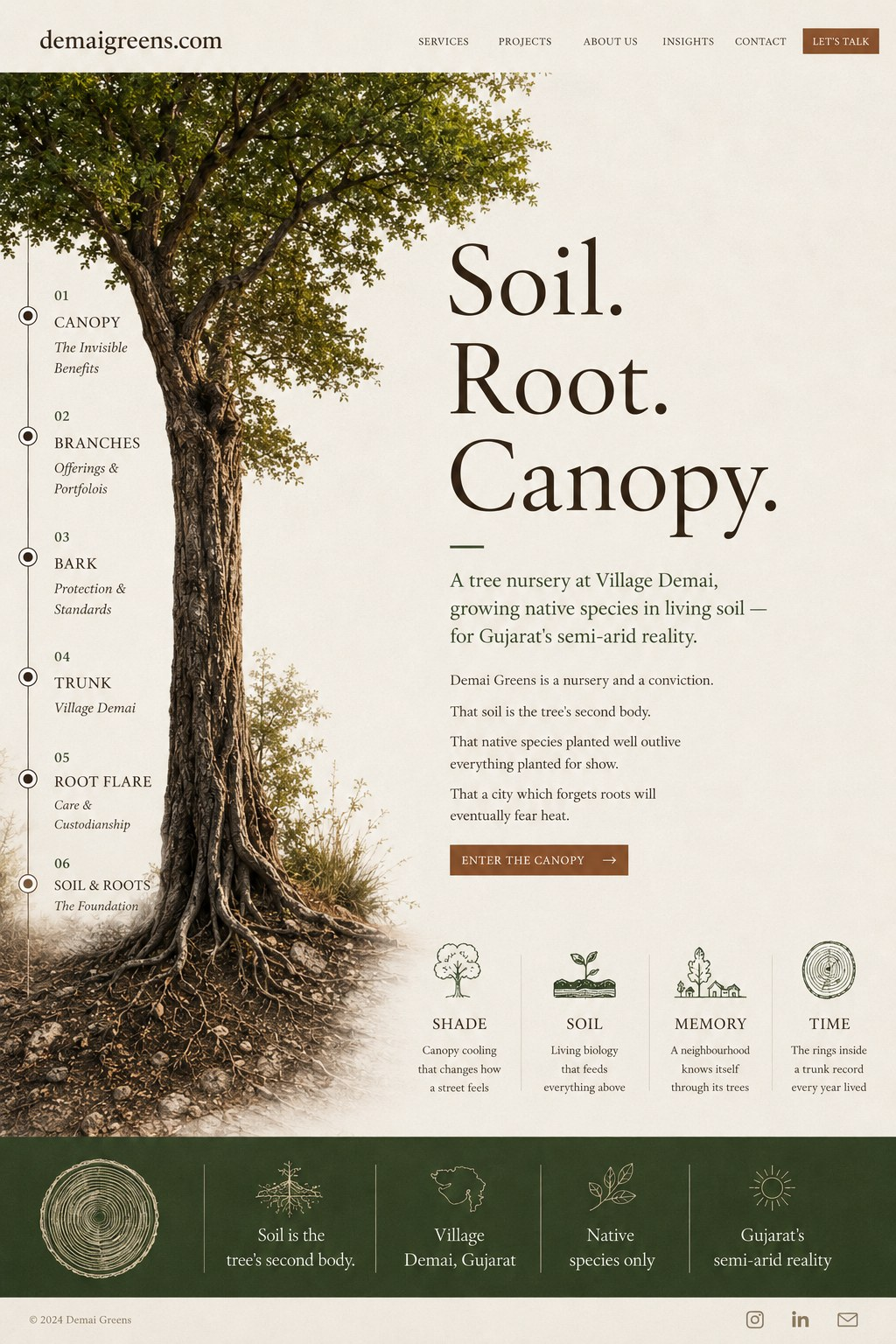
This visual becomes the map for our growing knowledge series: canopy, branches, bark, trunk, root flare, soil and roots. Each part can be entered independently, but together they describe how living green infrastructure is built.
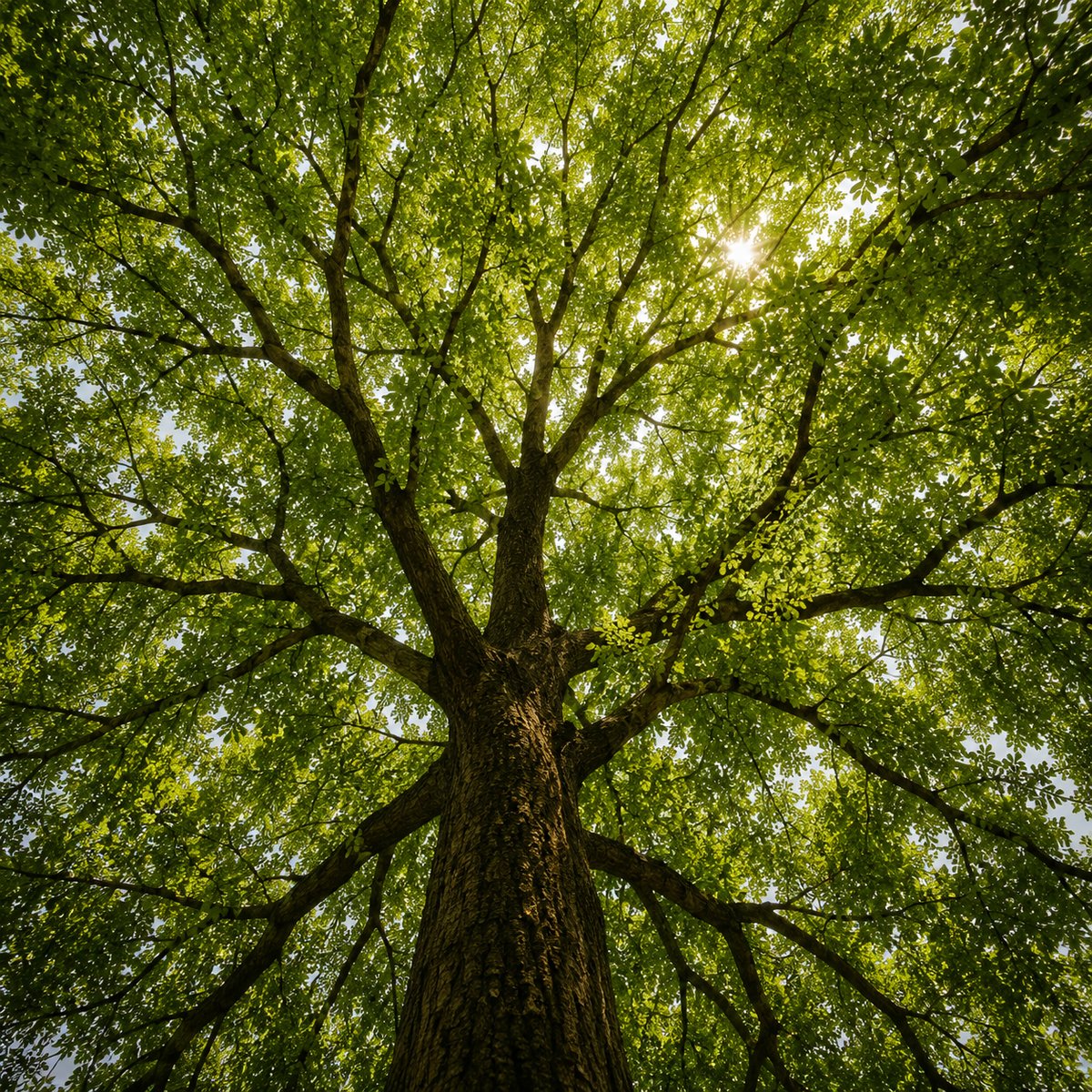
A tree in the city is not merely decoration. It is living infrastructure. It cools streets and compounds, softens harsh built surfaces, filters dust, slows rain runoff, supports birds and insects, stores carbon, improves mental wellbeing, and creates memory in a neighbourhood. A mature tree is a public asset even when it stands on private land — its shade, air, habitat, and beauty extend beyond any boundary.
In Ahmedabad, where summers cross 45°C, a mature canopy reduces surface temperatures by 10–15°C. Each tree removes up to 2 kg of particulate dust annually and intercepts hundreds of litres of stormwater. This is measurable infrastructure performance — compounding every year the tree lives. No air conditioner produces these benefits. No capital expenditure on built infrastructure produces this return over fifty years.
The mistake in most urban greening programmes is treating trees as objects to be installed — procured, transported, planted, photographed, and entered into a report. A tree is a living system that must establish roots, manage water, build tissue, defend wounds, and adapt to its site. If after-care is absent, the plantation remains a ceremony, not a contribution.
A tree does not ask who will sit in its shade before it gives shade.
The root works in silence; the fruit receives applause.
Science teaches what to do; philosophy teaches why to care.
True reverence is not garland. It is breathable soil.
The forest is not a collection of trees. It is a conversation.
A city that forgets roots will eventually fear heat.
To care for a tree is to practise time beyond personal urgency.
From the field — on what a nursery is really building
Your job is not to finish the forest. Your job is to start it.
To tend it for a while. Then to hand it to the next steward.
That is enough. That is more than enough.
What we have noticed — and what it means.
The intention is never wrong. A tree is planted. A photograph is taken. Something good has begun. What happens in the weeks after is where most stories quietly end — not because anyone failed, but because nobody told them what comes next.
A sapling planted without living soil cannot establish its roots in time. A tree without a custodian cannot survive its first summer. A plantation drive without a survival audit cannot know what it has actually achieved. We know what changes this. It is not more saplings. It is better roots from day one.
The first 90 days
Where the outcome is decided
Root establishment, transplant shock recovery, soil colonisation by beneficial biology — this is where the outcome is decided. Not at planting. Not at five years.
The survival audit
The beginning of learning
Return one year after. Count what lives. Ask why what died, died. The answers are almost always the same: wrong species, poor soil, no after-care. The audit is not criticism — it is the beginning of learning.
The three-year commitment
The real investment
Intensive support for three years. After that, most native species largely sustain themselves. The investment is not in more trees — it is in the knowledge that follows one tree properly into the ground.
First rains. First readings.
The site at Demai received its first structured soil assessment this season. Alkaline conditions confirmed, as expected for the Sabarmati basin. Organic carbon low. Compaction moderate. The living soil recipe is being calibrated for this specific ground. The first batch of Neem, Karanj, and Amaltas saplings are in nursery beds, under shade net, on drip irrigation. We are watching. We are recording. This log will grow with the season.
Our work is informed by four field-based publications on trees, soil, food forests and custodianship — written as textbooks for practice, now shared because the learning should not have to be done alone. Find them at niravmanubhai.com.