Demai Greens — Village Demai, Gujarat

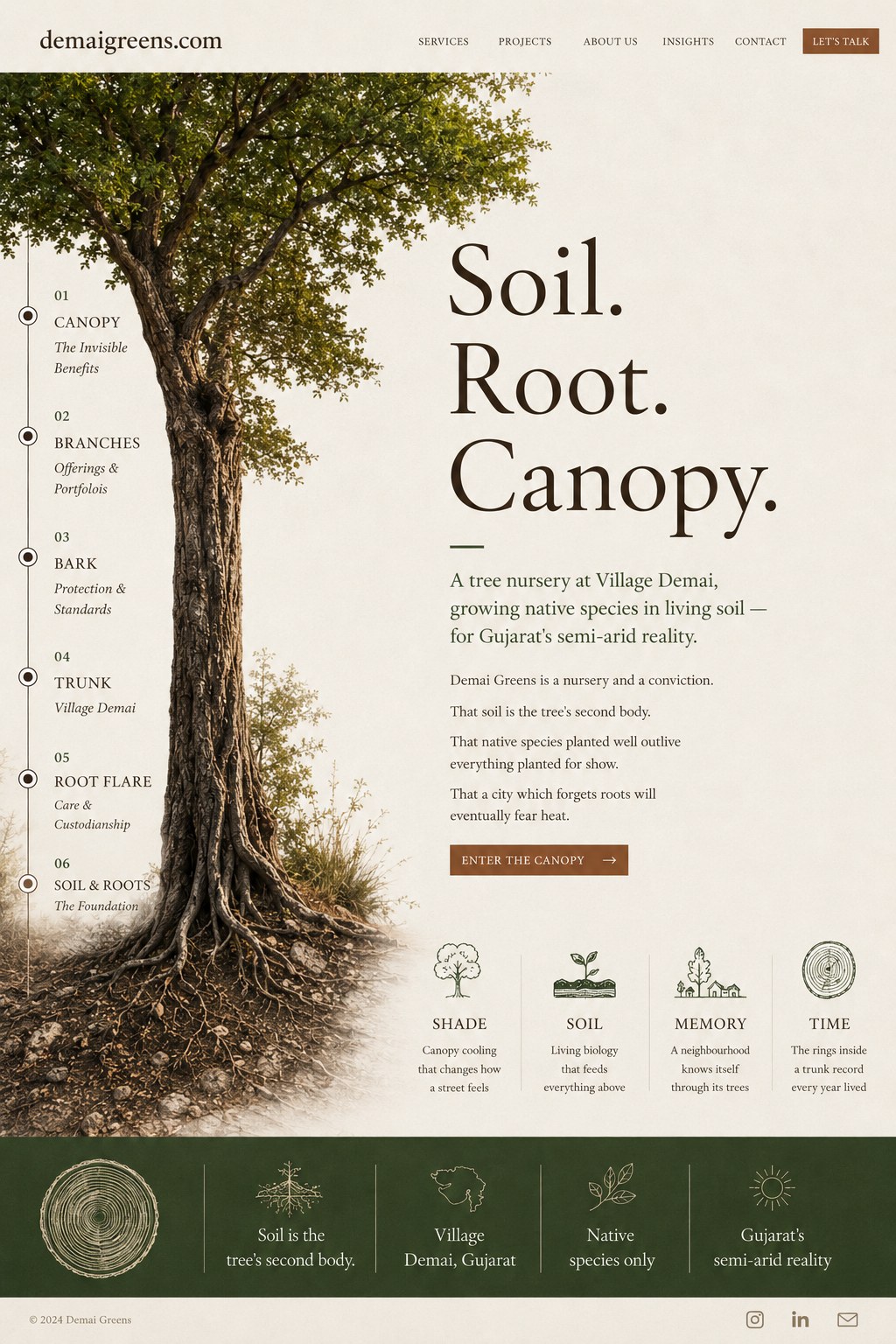
Soil. Root. Canopy.

A tree nursery at Village Demai, growing native species in living soil — for Gujarat’s semi-arid reality.

Demai Greens is a nursery and a conviction.

That soil is the tree’s second body.

That native species planted well outlive everything planted for show.

That a city which forgets roots will eventually fear heat.

Enter the canopy →

Shade

Canopy cooling that changes how a street feels at 4 pm in May.

Soil

Living biology that feeds everything above it, silently, for decades.

Memory

A neighbourhood knows itself through its trees. Remove them and it forgets.

Time

The rings inside a trunk record every year lived. A tree is time made visible.

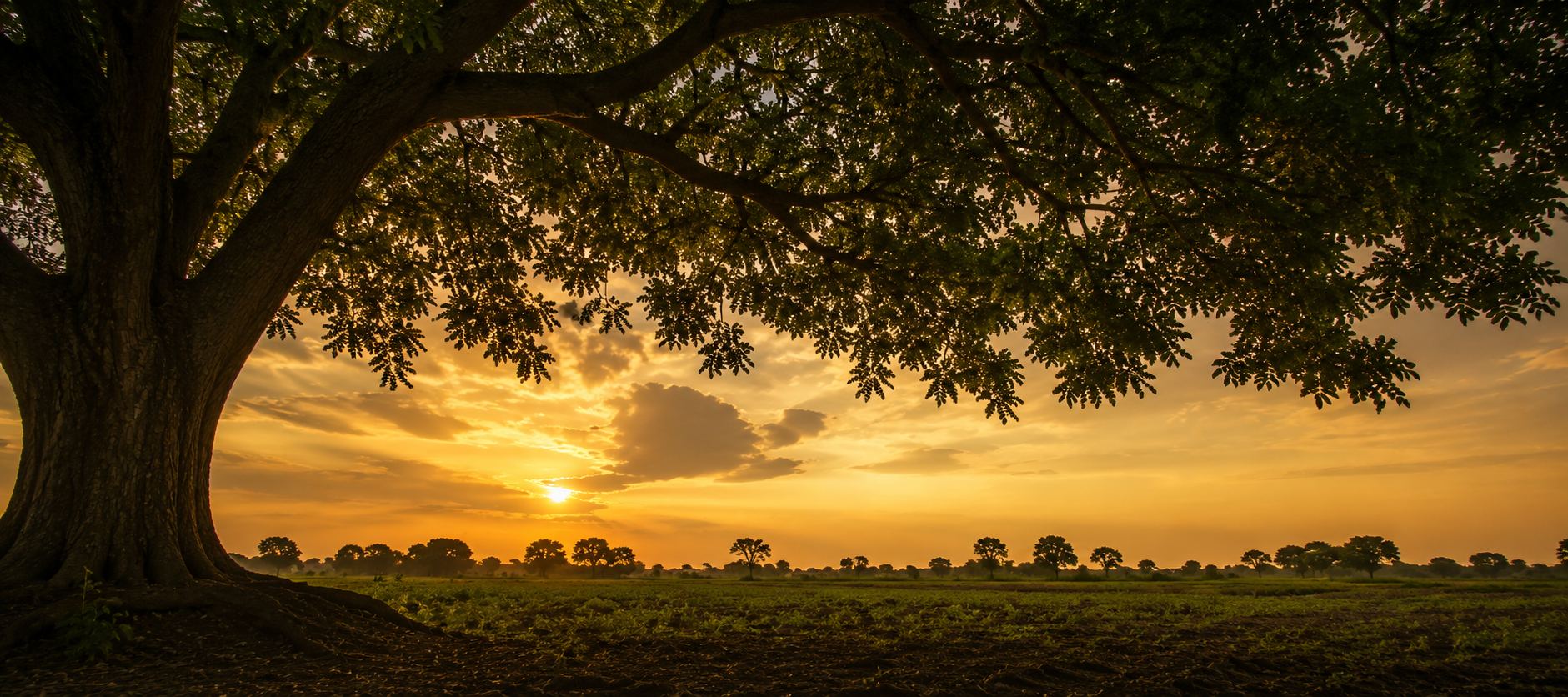
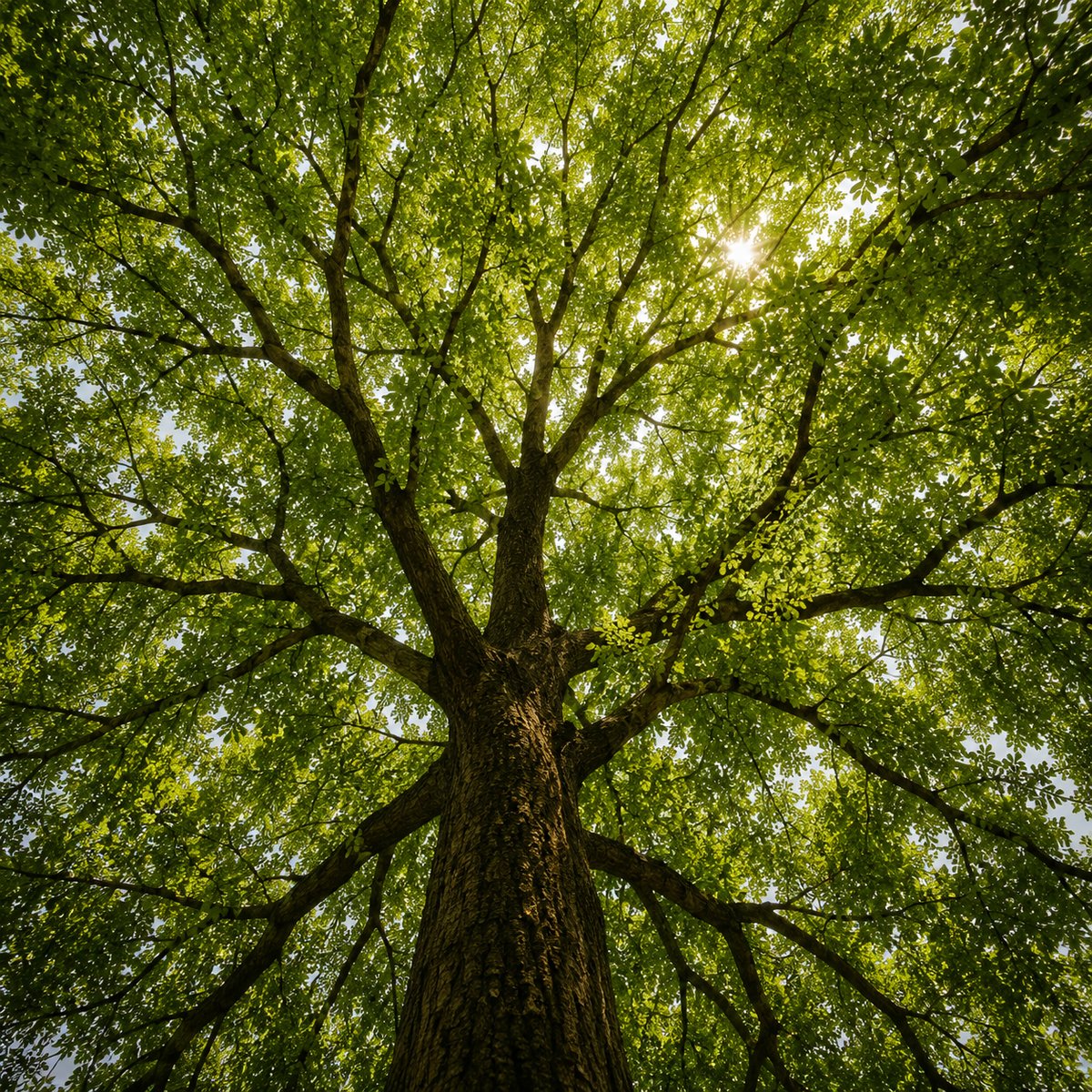
Looking up through a mature tree canopy, sunlight filtering through dense green leaves

The Invisible Benefits

Philosophy, science, and the value we have stopped counting.

A tree in the city is not merely decoration. It is living infrastructure. It cools streets and compounds, softens harsh built spaces, filters dust, slows rain impact, supports birds and insects, stores carbon, improves mental wellbeing, and creates memory in a neighbourhood. A mature tree is a public asset even when it stands on private land — because its shade, air, habitat, and beauty extend beyond property boundaries.

Transpiration cools. Shade cools too. A tree reduces heat by intercepting solar radiation and by evaporative cooling through its leaves. In Ahmedabad, where summer afternoons cross 45°C, a mature canopy can make a street feel dramatically different from bare paved ground. This is not luxury. It is environmental infrastructure.

A tree does not ask who will sit in its shade before it gives shade.

The root works in silence; the fruit receives applause.

To care for a tree is to practise time beyond personal urgency.

True reverence is not garland. It is breathable soil.

A city that forgets roots will eventually fear heat.

01 — PHYSICS

The science of cool

Transpiration, canopy micro-climate, dust interception, stormwater buffering. The measurable science behind what a mature tree gives its surroundings every single day.

02 — THE BOOK

Rooted Intelligence

A tree custodian’s handbook for urban care, soil wisdom, and AI-aided stewardship — written for Gujarat’s semi-arid reality. 138 pages. The intellectual foundation of everything we do.

03 — FIELD LOGS

From Demai

Seasonal notes from the nursery as it takes physical shape. Soil readings, root observations, weather transitions. The living record of what we are learning on the ground.

MONSOON 2025VILLAGE DEMAIFIELD LOG — 01

First rains. First readings.

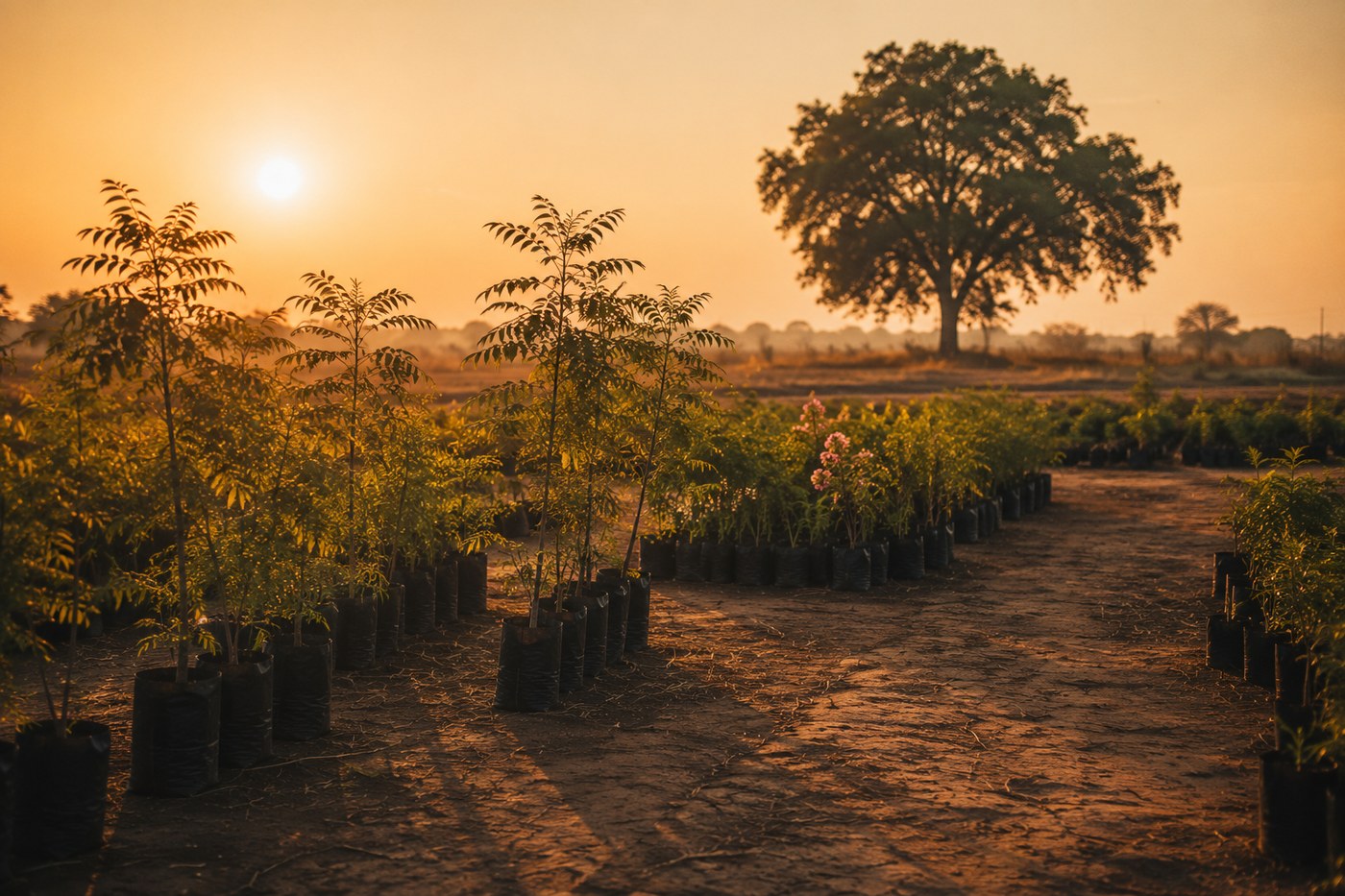
The site at Demai received its first structured soil assessment this season. Alkaline conditions confirmed, as expected for the Sabarmati basin. Organic carbon low. Compaction moderate. The living soil recipe is being calibrated for this specific ground. The first batch of Neem, Karanj, and Amaltas saplings are in the nursery beds. We are watching. We are recording. This log will grow with the season.

Offerings

Reaching into the community, the campus, and the landscape.

We do not sell trees. We offer planting material — saplings grown slowly, in living soil, from native and regionally appropriate stock. And we offer the soil recipe that makes the difference between a ceremony and a contribution. The commercial part of who we are lives here, among everything else, as one branch among many.

A Rs 500 sapling with Rs 5,000 of disciplined after-care over three years will outperform a Rs 5,000 sapling that receives nothing. We know this. Our proposition is built on this knowledge.

Government & Civic
Avenue shelter belts, green infrastructure frameworks, long-term survival audits. Plantation that gets counted — and stays counted.
Limbdo · Karanj
Arjun · Garmalo
Corporate Campuses
ESG-aligned biodiversity micro-forests, tree registers, shade corridor planning, annual canopy audits. Trees as long-term assets, not temporary décor.
Mahuda · Jambu
Borsalli · Vad
Gated Communities
Campus greening, wind and dust buffers, micro-climate cooling, soil restoration. The kind of shade that changes how a compound feels on a May afternoon.
Amaltas · Amla
Bilva · Khakhro
Farms & Orchards
Native boundary trees, windbreaks, regenerative planting, living soil supply. Species that earn their place in an agricultural system over a lifetime.
Neem · Saragvo
Ber · Desi Babul
Schools & Institutions
Trees as outdoor classrooms. A child who learns that roots need oxygen may later question why a city pours concrete around trunks. Environmental education with practical consequences.
Selected for
learning value

A second branch

Biophilic as a Service — aesthetic uptime for your immediate environment.

Not everyone wants to buy pots, source plants, maintain them, replace them when they decline, and start again. They want a living, beautiful environment — without the labour of ownership.

BaaS is a subscription: we curate, install, and replace climate-hardy indoor and patio plants on a 60-day cycle. The plants are always healthy. The space is always alive.

  • Curated palette of climate-hardy ornamental and flowering varieties
  • Installation, maintenance, and replacement on a fixed schedule
  • Suited for offices, lobbies, residences, restaurants, and studios
  • 60-day rotation — aesthetic uptime, not plant ownership

Protection & Standards

Many trees do not need more fertiliser. They need less injury.

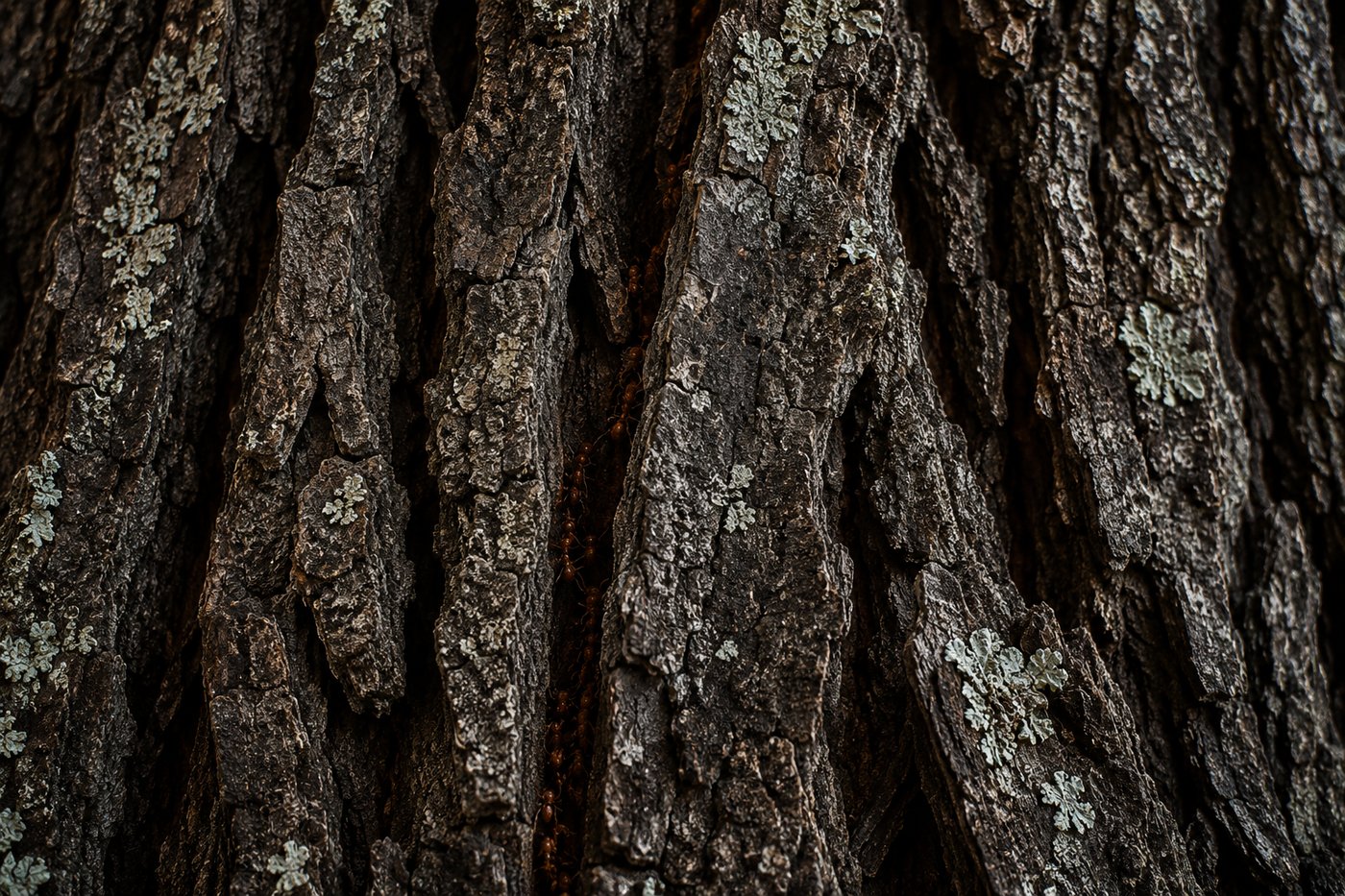
Bark protects the living tissues that carry water and nutrients up and down a tree. When bark is damaged in a ring around the trunk — by tight wires, ropes, labels, decorative lighting, or tree guards left too long — the transport system is interrupted. This is called girdling. It can be fatal. Even partial damage weakens a tree for years before it shows.

We share these standards openly — as field checklists, contractor guidelines, and care protocols — because the most important work we can do for Gujarat’s urban trees is to reduce the harm already being done to them.

Tree Protection Zones

How to protect mature root systems during construction and paving. The most damage done to urban trees happens not in storms but in quiet weeks of road widening.

Pruning Standards

The difference between a structural cut and destructive lopping. What the branch collar is and why every cut must respect it. Topping is amputation mistaken for a haircut.

Contractor Guidelines

Ready-to-use field checklists for facility managers. Approved versus harmful tree-guard types. What to specify in maintenance contracts — and what to prohibit.

Tree Register Protocol

A tree register is the medical history of a living asset. Species, location, size, health status, maintenance history, next action. Over time, patterns emerge that no single season reveals.

“Saying a tree is sacred is meaningless if its roots are cemented. True reverence is correct action.”

Village Demai

The sanctuary, the site, and regional intelligence.

The nursery at Village Demai, approximately 100 kilometres from Ahmedabad, is being built not as a warehouse of saplings but as a living record of what grows here, how it establishes, and what semi-arid Gujarat can support with the right preparation.

Ahmedabad’s tree-care reality is shaped by heat, dust, dry winds, alkaline soil, and long dry seasons. Native species, planted in monsoon, watered deep, mulched properly. A landscape of one species is like a community with one skill.

Limbdo

Neem

Large, hardy, drought-tolerant once established. Gujarat’s most giving tree.

Roadsides · Farms · Campuses

Vad

Banyan

Sacred fig with massive canopy and aerial roots. Needs generational space — and deserves it.

Parks · Temple grounds · Open institutions

Mahudo

Mahuda

A tree of culture, food, memory, and ecology. Large native with deep regional significance.

Farms · Biodiversity areas · Open landscapes

Jambu

Jamun

Fruit, shade, and wildlife. Stains the tongue purple. Earns its place in any garden.

Campuses · Gardens · Community spaces

Garmalo

Amaltas

Golden shower. The tree that announces summer with unmistakable clarity.

Avenues · Campuses · Institutions

Khakhro

Palash

Flame of the forest. Biodiversity anchor. One of the most ecologically generous flowering trees of the region.

Biodiversity areas · Farm boundaries

Borsalli

Spanish Cherry

Medium evergreen, fragrant and refined. A graceful tree for intimate urban spaces.

Courtyards · Campuses · Temple areas

Saragvo

Drumstick

Edible, fast-growing, multifunctional. Most underused asset in farm boundary planting.

Farms · Kitchen gardens · Boundaries

Custodianship

Do not create tree planters. Create tree custodians.

A planter works for one day. A custodian watches the tree through seasons. A planter counts saplings. A custodian counts survival, shade, root health, soil condition, and long-term usefulness.

Most urban trees are harmed not by climate but by misunderstanding. The damage is quiet and continuous. A tree may look acceptable for years while its root environment is degrading.

Buried root flareThe neck of the tree, buried under added soil. “You tried to hold its neck and called it support.”
Mulch volcanoA cooling blanket placed against the trunk, not around it. Mulch protects the soil, not the stem.
Shallow watering“Every morning a man poured one mug of water at the trunk. Another dug six inches away and found dry soil.”
ToppingAmputation mistaken for a haircut. The vigorous regrowth fools the eye — the tree is spending reserves, not gaining strength.
Root zone pavingAsking roots to breathe through a closed fist. Fine roots decline quietly for years before the canopy shows it.

“When you eat one good meal after years of neglect, do you become healthy by evening? The tree works on its own time. The custodian learns to work on the tree’s time.”

Soil cross-section: dark living soil with roots and mycelium on left, pale compacted dead urban soil on right

The Foundation

Soil is the tree’s second body. Feed the soil, and the soil supports the tree.

Urban soil is frequently damaged. Construction rubble, cement dust, excess salts, compacted layers, poor organic matter. A tree planted into such soil is like a patient asked to recover in a polluted room without ventilation. Most plantation drives do not fail because of bad saplings. They fail because the roots suffocate before the tree has a chance to grow.

Ahmedabad and much of Gujarat present alkaline soil conditions, often compounded by high-TDS borewell water. Nutrients may be present but chemically locked — which is why adding more general fertiliser does not solve the problem. The approach must begin with the soil itself.

Physics

Structure & Air

Texture, aggregates, pore space. A root cannot use nutrients well if it cannot breathe or grow. Structure is often more important than fertiliser.

Chemistry

pH & Nutrients

Alkalinity, nutrient availability, salinity. In Gujarat’s soils, iron, manganese, and zinc may be present but locked. Understanding pH is the prerequisite.

Biology

Living Networks

Mycorrhizal fungi, organic carbon, compost, micro-organisms. Soil is not dirt. It is a living community. Restore it, and the roots do the rest.

The Living Soil Recipe

A sustained-release planting medium addressing all three pillars — designed for fast root establishment and low fatality in dry, alkaline, semi-arid conditions. Not a fertiliser. A foundation.

  • Organic compost — slow food for the soil community
  • Leaf mould — structure and moisture retention
  • Biochar — long-term carbon and pore space
  • Bio-inputs — mycorrhizal inoculants and beneficial biology
  • Neem cake — natural pest deterrent and nitrogen
  • Coarse grit — aeration in compacted sites
  • pH buffer — for Ahmedabad’s alkaline conditions

“Plant less. Care more. Protect for life.”